Guide
Commercial vs. Regular Thermostats
How to tell whether a project needs a commercial control strategy or a standalone regular thermostat.
Updated
"Commercial" and "regular" describe how a control fits into a system, not just where it is installed. Both classes usually run on the same 24 VAC low-voltage circuit and drive the same core terminals (R, C, W, Y, G, O/B) - the real difference is scheduling, staging depth, networking, and how the control is managed. Use the equipment and the required sequence of operation to decide.
1. Start with the equipment and sequence
Begin with the controlled equipment and the intended sequence of operation. A single standalone unit with one or two stages of heat and cool has very different needs than equipment tied into central scheduling, remote access, alarming, and coordinated zones. Write down the required sequence first; it is the clearest guide to the control strategy.
2. Compare the two classes at a glance
| Factor | Regular (standalone) thermostat | Commercial / connected control |
|---|---|---|
| Typical use | One unit, local control | Multi-unit or multi-zone sites |
| Staging | 1-2 heat / 1-2 cool common | Multi-stage, heat-pump, dual-fuel |
| Scheduling | On-device 7-day / non-programmable | Central schedules, occupancy, setback |
| Remote access | Limited or app-only | Portal / building-network management |
| Alarms & trends | Rarely | Alarming, logging, trend data |
| Extra hardware | Usually none | Gateways, controllers, sensors, repeaters |
| Power | C wire recommended |
C wire typically required |
3. Where a regular thermostat fits
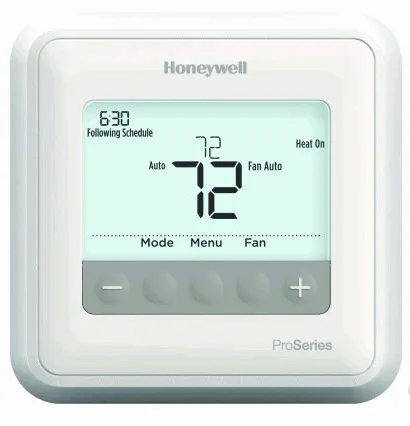
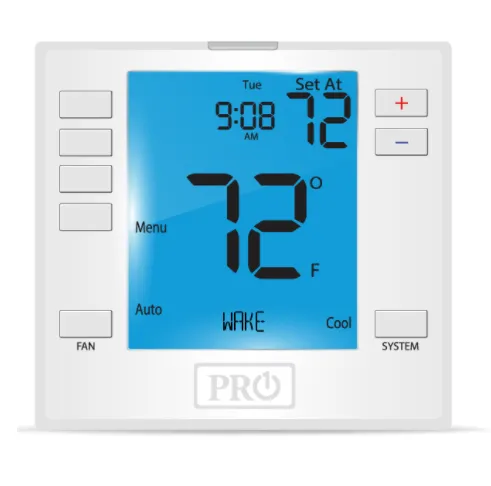
A standalone regular thermostat is often the right answer for a single unit with straightforward staging and no requirement for centralized management - for example, a small gas/electric package or a split system with local scheduling. Match the stage count and heating type (conventional vs. heat pump) to the equipment and confirm a C wire is available for powered models. When the goal is reliable local temperature control of one system, a well-matched regular thermostat is the simplest solution.
4. Where a commercial control is required
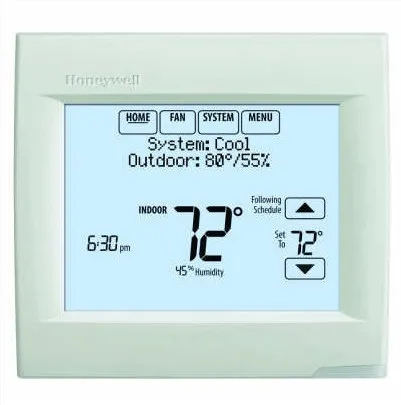
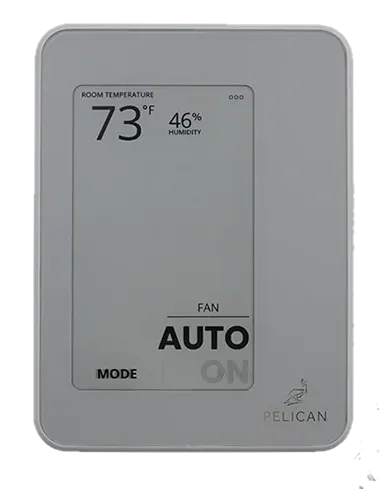
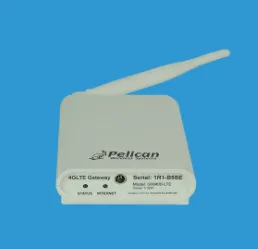
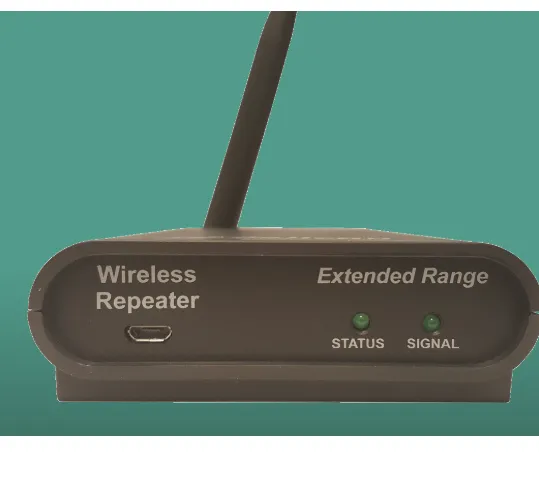
Connected commercial controls are warranted when a project needs centralized scheduling, remote monitoring, alarms, demand-controlled ventilation, or coordination across multiple units and zones. These installations depend on gateways, equipment controllers, and remote sensors working together as a system - a wireless mesh such as a Pelican gateway-and-repeater architecture is a good example, where the wall control is just one role. Selecting one piece without the rest risks an incomplete design.
5. Confirm before ordering
Compare your equipment details and operating goals with current manufacturer documentation, and verify every required component before ordering. A shared brand name or product category does not by itself establish that two components will operate together. Site information is educational and does not replace engineering approval or qualified installation work. For help organizing a project review, send your equipment models, wiring photos, and the required sequence to sales@coldaircentral.com.